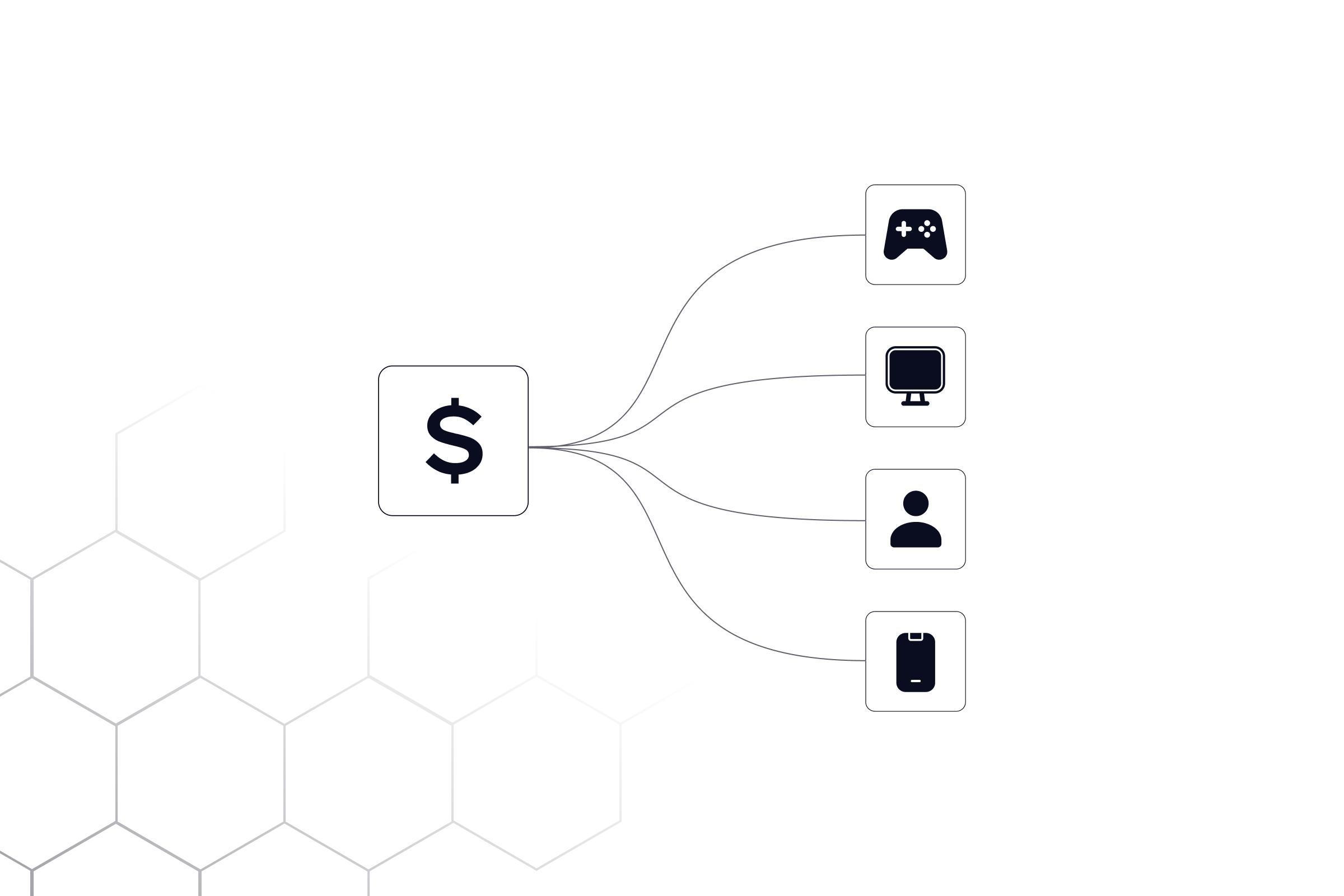
Lightning Is the Payment Rail for Interoperable Money Movement

Businesses do not need another closed payment button. They need a payment rail that can connect wallets, apps, platforms, and customers through one open standard.
The Payment Problem Is Bigger Than Checkout
Most payment conversations start at the checkout screen.
Which button should we add? Which wallet should we support? Which processor can get us access to a specific customer base? Which payment method will reduce friction for the next deposit, purchase, payout, or transfer?
Those are reasonable questions. But they miss the deeper problem.
Businesses are not just trying to add another payment option. They are trying to connect to the way customers already move money.
That behavior is increasingly fragmented. Customers earn through payroll, gig work, creator platforms, resale marketplaces, peer-to-peer payments, cash deposits, instant debit payouts, digital wallets, and side businesses. They spend from different apps. They move money between accounts. They expect funds to be available quickly. They do not think in banking rails. They think in outcomes.
Did the payment work? Was it instant? Was it affordable? Could I use the balance I already had?
That is why Lightning matters.
Lightning is not just a faster Bitcoin payment method. For businesses, it is an interoperable payment rail that can connect many different wallets, applications, and platforms through a shared network.
Closed Payment Networks Create Closed Growth
Most modern payment methods are useful, but they are also closed.
A business integrates a wallet. A customer needs that wallet. A platform negotiates with a processor. A processor supports certain regions, merchants, limits, risk rules, and settlement timelines. Every new customer segment often means another commercial relationship, another integration, another reconciliation process, and another exception path for support.
That model can work, but it does not scale cleanly.
Closed payment networks tend to create closed growth. The business gets access to one payment method at a time, often through one provider at a time, under rules that may not map neatly to the product experience the business wants to build.
Lightning changes the shape of the integration.
Instead of integrating separately with every wallet or app that might hold customer funds, a business can accept payments over an open network. Any eligible wallet or application that can pay a Lightning invoice can become part of that customer's payment path.
That is the strategic difference.
The business is not betting on one button. It is adding a rail.
Cash App Shows Why This Matters
Cash App is one of the clearest public examples of why Lightning interoperability is becoming commercially important.
Cash App has supported Bitcoin and Lightning experiences for years, and its recent product updates have made the consumer story easier to understand. Cash App has described Bitcoin Payments with USD, where eligible customers can scan a Lightning QR code and use their Cash App USD balance to make a Lightning payment without holding or spending bitcoin themselves. In that flow, the customer can think in dollars while the merchant receives bitcoin over Lightning.
That is not just a Bitcoin feature. It is a payments lesson.
The best payment experiences hide the infrastructure from the customer. A customer does not need to know how card settlement works to tap a card. They do not need to understand ACH files to receive payroll. They should not need to become a Bitcoin expert to benefit from a faster payment rail.
If an eligible customer can use a familiar app to pay a Lightning invoice, the business gets something powerful: the reach of consumer payment behavior paired with the settlement properties of an open network.
This is why the public framing matters. The opportunity is not "Cash App access" as a closed distribution channel. It is Lightning interoperability. Cash App is one example of a mainstream consumer app that can make that interoperability visible.
For businesses, the practical question becomes simple:
Can customers pay from the wallet or app they already use, and can the business receive final settlement quickly over Lightning?
Interoperability Is the Real Product Feature
Interoperability sounds technical, but customers feel it every day.
They feel it when a payment app can scan a QR code and the payment just works.
They feel it when a payout lands quickly and can be used somewhere else.
They feel it when money is not trapped inside one closed balance.
They feel it when the business does not force them through a new account, a new funding step, or a new payment credential just to complete a simple transaction.
For a business, interoperability creates leverage in several ways:
- More payment paths from one integration. A Lightning invoice can be paid by eligible Lightning-enabled wallets and apps, instead of requiring a separate payment integration for each consumer app.
- Faster settlement. Lightning payments can settle in seconds, which can improve account funding, order confirmation, withdrawal experiences, and reconciliation.
- Lower network cost. Lightning is designed for low-cost value movement, which can matter most when transaction volume is high or margins are thin.
- Reduced chargeback exposure. Lightning payments are push payments, which changes the risk profile compared with card payments.
- Better product control. Businesses can design the payment experience around their product rather than outsourcing the whole customer journey to a hosted payment page.
This does not mean every payment should move over Lightning. Cards, ACH, bank transfers, debit payouts, RTP, FedNow, stablecoins, and closed wallets all have roles in the payment stack.
But it does mean Lightning should be evaluated as infrastructure, not as a niche crypto checkout option.
The Modern Earner Needs Better Payment Infrastructure
The strongest case for Lightning is not only merchant acceptance. It is the broader shift in how people earn and move money.
The traditional financial system still assumes a clean pattern: a worker gets paid by an employer, money lands in a bank account, and payments move from there. But modern customers often live across multiple income streams and multiple apps.
A creator may receive platform payouts, peer-to-peer transfers, sponsorship payments, and marketplace income.
A contractor may receive instant debit payouts from one platform, ACH from another, and peer payments from customers.
A household may split bills through payment apps, deposit cash, move money between wallets, and spend from whichever balance is available first.
In that world, payment infrastructure cannot depend only on direct deposit and card credentials. It has to connect to fragmented income.
Lightning fits that environment because it is open, instant, programmable, and wallet-native. It can serve deposits, withdrawals, merchant payments, creator payouts, rewards, remittances, marketplace settlement, and peer-to-peer value movement.
The business opportunity is not simply "accept bitcoin."
The business opportunity is to meet customers where money already lives and move value instantly across interoperable rails.
What Businesses Actually Need to Build
A business does not need to become a Lightning infrastructure company to use Lightning well.
It needs a payment experience that makes sense for the customer and an infrastructure partner that can handle the operational layer underneath.
The product team should be able to answer questions like:
- Where in the experience should the customer see Lightning as a payment option?
- Should the flow be shown as Bitcoin, Lightning, instant payment, wallet payment, or something else?
- What happens after the customer scans an invoice?
- How quickly should the user account, order, wallet balance, or merchant ledger update?
- What does support see when a payment succeeds, fails, or expires?
- How does the finance team reconcile payment activity?
- Does treasury want to receive and hold bitcoin, or use a structure that reduces Bitcoin balance-sheet exposure?
Those are product and operating-model questions. They are not reasons to avoid Lightning. They are reasons to use infrastructure built for businesses.
Where Voltage Fits
Voltage helps businesses add Lightning payments as a payment rail without taking on the full burden of running Lightning infrastructure themselves.
That includes the pieces most teams do not want to build from scratch: node operations, payment infrastructure, liquidity management, uptime, routing reliability, logs, webhooks, support visibility, and API surfaces that engineering teams can actually build against.
For businesses that want to receive payments, send payouts, support deposits and withdrawals, or add wallet-compatible payment flows, Voltage provides the infrastructure layer behind the product experience.
That matters because the hard part is not creating a Lightning invoice in a demo. The hard part is making Lightning reliable enough for real customers, real balances, real support teams, and real finance workflows.
Voltage lets the business focus on the customer-facing payment experience while the infrastructure underneath is managed for production.
The Better Question
When businesses ask about a specific payment app, they are usually asking a bigger question.
Can we reach customers who already use this app?
Can we reduce payment friction?
Can we lower cost?
Can we settle faster?
Can we avoid building a separate integration for every new wallet, app, or customer segment?
Lightning gives those questions a different answer.
Instead of treating every wallet as a separate payment island, Lightning gives businesses an open rail that eligible wallets and applications can connect to.
Cash App is an important example because it shows how familiar consumer payment behavior can meet Lightning payments in a way that does not require the customer to think like an infrastructure engineer.
But the larger story is not Cash App alone.
The larger story is interoperable money movement.
Businesses that understand this will not think of Lightning as a crypto add-on. They will think of it as payment infrastructure for a world where customers earn, store, and spend money across many different apps.
That is the rail worth building on.